


The equestrian market is growing fast. More people are riding, and they are spending money on their passion. However, even with all the new products available, riders are not completely happy. In fact, many riders are frustrated with the gear they use every day. Whether it is a saddle that slips or breeches that don't fit right, these complaints are common.
For brands and retailers, knowing these problems is the first step to fixing them. As an experienced manufacturing partner, Zest Equestrian tracks these trends closely. We have gathered data on the biggest complaints riders have right now.
Here is a quick look at the most common problems, how often they happen, and why they matter.
Feature Snippet: Top Rider Complaints at a Glance
| Gear Category | Most Common Complaint | Prevalence Rate | Impact on Horse/Rider |
|---|---|---|---|
| Saddle | Overall fit problems | 90% of assessed saddles | Back pain, behavioral issues, tissue damage |
| Седловые накладки | Slipping during riding | 50% of riders | Pressure points shift, reduces effectiveness |
| Bridles | Browband too small | Top 3 across disciplines | Pressure on sensitive facial nerves |
| Шлемы | Improper sizing/Head shape | 42% fit gap | Headaches, compromised safety |
| Бриджи | Inconsistent sizing | 35% of riders | Discomfort, returns, difficult fit |
Проницательность: For equestrian brands in 2024–2025, rider complaints are clustering around safety performance, heat and discomfort, inconsistent fit and sizing, durability vs. price, and sustainability credentials, making gear design a strategic differentiator rather than a commodity decision.
1. Saddle Fit & Stabilization: The Industry’s Biggest Challenge
The Shocking 90% Statistic
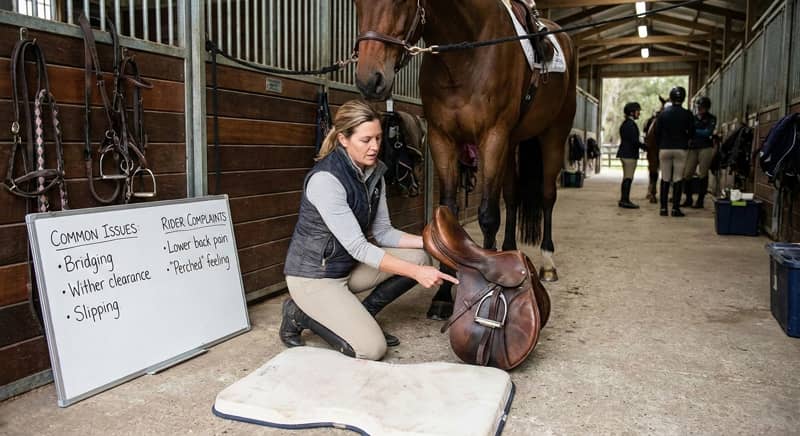
The saddle is the most important piece of gear for connecting the rider to the horse. Yet, it causes the most problems. Research shows that a massive 90% of saddles have some kind of fit issue. This is a huge number. Only about 10% of saddles are considered problem-free by professionals. This means that almost every rider you meet might be struggling with their saddle.
It isn't just about the horse, either. Riders often complain that the seat is too small or that the saddle tips them forward. When a saddle doesn't fit the rider, it forces them into a bad position. This makes riding harder and can actually double the weight the horse feels on its back. This leads to back pain for the horse and frustration for the rider.
The Slipping Issue and Pad Misuse
Because saddles fit poorly, riders try to fix the problem themselves. They often use saddle pads to fill gaps or stop the saddle from moving. However, this creates a new set of complaints. About 50% of riders say their накладки на седло slip while they are riding. A slipping pad is annoying and dangerous because it changes the pressure on the horse's back.
Furthermore, many riders use too many layers. They might use a gel pad, a sheepskin pad, and a cotton pad all at once. This "over-layering" can make a saddle fit too tight, just like wearing three pairs of thick socks in your shoes. Brands have a big opportunity here. Riders are looking for better signature saddle pad collections that offer stability and grip without needing extra bulk.
2. Safety Equipment: Where Fit Compromises Protection
Helmet Headaches: Round vs. Oval
Safety is the top priority, but riders will not wear gear that hurts them. A major complaint regarding товары для безопасности верховой езды is helmet shape. Heads come in different shapes—some are round, and some are oval. However, many helmet brands only make one shape. This leads to "bridging," where the helmet touches the front and back of the head but leaves gaps on the sides, or vice versa.
When a helmet doesn't fit the shape of the head, it creates painful pressure points. This causes headaches within minutes of riding. If a helmet hurts, a rider is less likely to wear it every time. Or, they might buy a size too big just to stop the pain, which means the helmet will slide around and won't protect them in a fall.
The Heat Problem
Another big complaint is heat. Riders work hard, and they sweat. Traditional safety gear often traps heat against the body.
"Leaving aside cost and added bulk, the biggest problem… is that a protective vest makes me very hot during warm weather… wearing a vest increases the heat buildup in the body." – The Plaid Horse article on protective vests, 2024.
Riders are begging for gear that breathes. They want vents in their helmets and body protectors that use mesh or cooling fabrics. If a brand can solve the heat problem, they will win over many customers.
3. Bridle & Bit Issues: The Overlooked Source of Pain
Browbands Are Often Too Small
While saddles get a lot of attention, bridles have hidden issues too. The number one complaint across all riding disciplines is that the browband is too small. The browband is the strap that goes across the horse's forehead. If it is too tight, it pulls the rest of the bridle forward into the back of the ears.
This area behind the ears is full of sensitive nerves. Pressure here can cause headshaking and bad behavior. Many standard bridles are made with browbands that are simply too short for modern warmbloods and sport horses, who often have wider foreheads. This is a clear manufacturing oversight that is easy to fix with better patterns.
Anatomical Designs Required
Riders are becoming smarter about anatomy. They know that standard nosebands can press on sensitive facial nerves or restrict breathing if they are too low. As a result, there is a growing demand for horse control products and headcollars that are "anatomical." This means they are shaped to curve around the sensitive parts of the horse's face. Old-fashioned flat leather designs are leading to more complaints about horse comfort.
4. Rider Apparel: The Demand for Consistent Sizing
The Frustration with Breeches
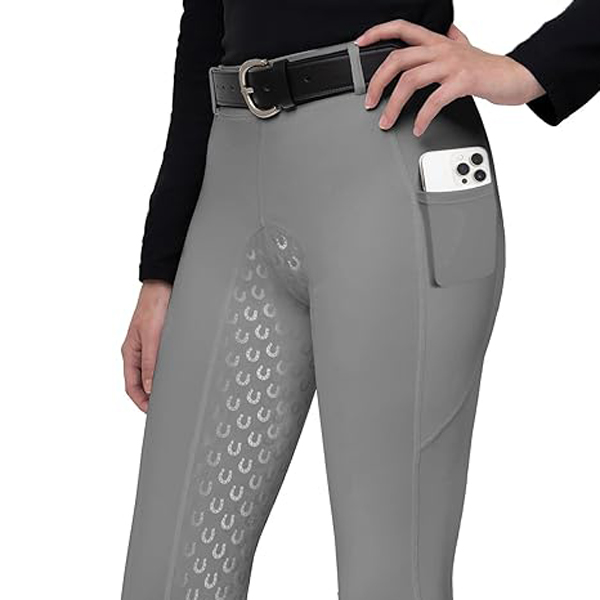
Buying clothes is supposed to be fun, but for riders, buying бриджи для верховой езды is often stressful. The biggest complaint is inconsistent sizing. A rider might be a size 28 in one brand but a size 32 in another. This is often called "vanity sizing," and it is very confusing.
Additionally, durability is a major concern. Riders are tired of zippers that break after a month or seams that split in the crotch. They want пользовательская одежда для верховой езды that lasts. Riders also complain about a lack of options for petite or tall riders. Standard lengths do not fit everyone, and having baggy knees or ankles is uncomfortable in the saddle.
Durable Breeches
Grip Gloves

Performance Socks
Boot Fit Struggles
Boots have their own set of problems. The most common complaint is finding boots that fit the calf properly. Riders with athletic, muscular calves often cannot zip up standard boots. On the other hand, riders with very slim legs find that boots gape open at the top.
There is also a difficult trade-off between comfort and lasting power. Soft boots feel great right away but might wear out in a year. Stiff boots last longer but hurt to break in. Riders want a middle ground: boots that are durable but don't require weeks of pain to wear.
5. The Role of Professional Assessment
Experts vs. Brands
Who notices these problems first? Usually, it is not the rider, but a professional. Saddle fitters, coaches, and equine therapists are the ones who see the damage poor gear causes. They report that many brands are designing for "shelf appeal" (looking good in the store) rather than "biomechanics" (working well on the horse).
For example, a headcollar manufacturer might use heavy metal buckles that look fancy. However, a therapist will point out that the weight drags on the horse's poll (neck). Brands that listen to these professionals and fix these small details build much more trust with their customers.
Если вы хотите открыть бизнес по производству одежды для конного спорта, listening to professional feedback is the best way to avoid common mistakes.
6. Solving the Problem: How Better Manufacturing Fixes Gear Complaints
Precision Matters with CAD
So, how do we solve these complaints? The answer lies in better manufacturing. Old methods of cutting fabric by hand can lead to slight differences in size. This is why one pair of breeches fits differently than another.
At Zest Equestrian, we use CAD-assisted pattern development. This means a computer designs the pattern, ensuring every millimeter is accurate. This solves the complaint of inconsistent sizing. Whether you order 100 pairs or 1,000, they will all fit exactly the same.
“Performance fabric technologies are… elevating functional performance standards, compelling brands to invest in research partnerships and proprietary material development.” – 360iResearch, Equestrian Apparel Market.
Customization and Flexibility
Finally, brands need to test their products. Large minimum order quantities (MOQs) scare brands away from trying new, better designs. By offering flexible MOQs, manufacturers can help brands launch specific "petite" or "curvy" lines to address sizing complaints without taking a huge financial risk. This is a core part of our Услуги OEM и ODM.
Люди также спрашивают
How do I tell if my saddle is too small for me?
A quick check is the "four-finger rule." You should be able to fit four fingers sideways between your bottom and the back (cantle) of the saddle. If you can only fit one or two fingers, the saddle is likely too small. This will push you into a "chair seat" position and make it hard to balance.
Why are riding breeches so expensive?
Good breeches use technical fabrics that stretch four ways, wick away sweat, and resist abrasion. They also have complex patterns with knee patches or full seats. This construction is much more difficult than making regular leggings or jeans, which increases the cost.
How long should riding boots last?
This depends on how often you ride. If you ride every day, boots might last 2 to 3 years. If you only ride on weekends and take good care of them, they can last 5 to 7 years. Cleaning them after every ride helps them last much longer.
What are the signs a riding helmet doesn't fit?
If your helmet leaves a red mark on your forehead, it is too round for your head shape or too tight. If it rocks back and forth when you move, it is too big or too oval. A helmet should feel snug all over, like a firm handshake, without squeezing any single spot.
Turn Complaints into Your Brand's Advantage
Riders are speaking up about what they need. Is your brand listening? By addressing these common complaints—from sizing consistency to cooling safety gear—you can capture a loyal audience.
Zest Equestrian is here to help you manufacture the solutions. With over 16 years of experience and a focus on precision and eco-friendly materials, we turn your design concepts into high-performance reality.
Внешние ресурсы